
While self improvement is healthy, we also need to learn to accept our flaws and understand that we are perfect just as we are.
Reading Time:
I consider myself a reasonably good person. However, by no stretch of the most fertile imagination am I close to being perfect, in the sense of not having imperfections. I have many flaws – impatience, stubbornness, bossiness, and laziness amongst them.
By the way, I love this take on bossiness:

Also, I love learning new things but I HATE being told what to do. If I were told to describe myself in one word, it would be:
“Does.Not.Follow.Directions.Well.” 😂
Further, I have a list of imperfections that centre around the things I lack. For example that I am not more confident / funny / interesting / successful / content etc.
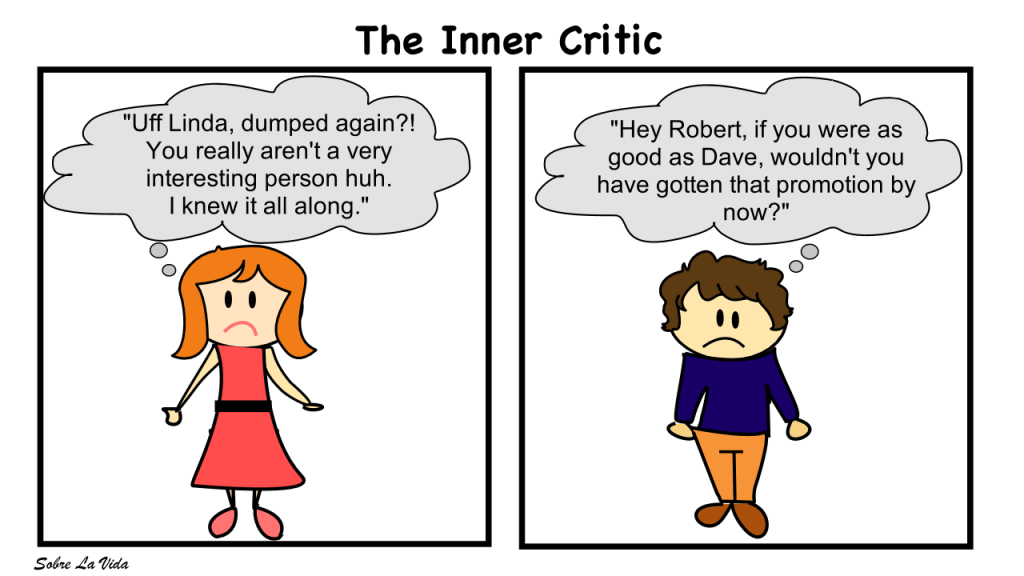
I’m sure you have your own list of imperfections and things you feel you lack. And more likely than not, you have an inner voice that reminds you of them. We all have to deal with this inner voice at times, some of us more than others. Too often we get caught up in our imperfections and the feeling of not being good enough.
The Meaning of Perfect
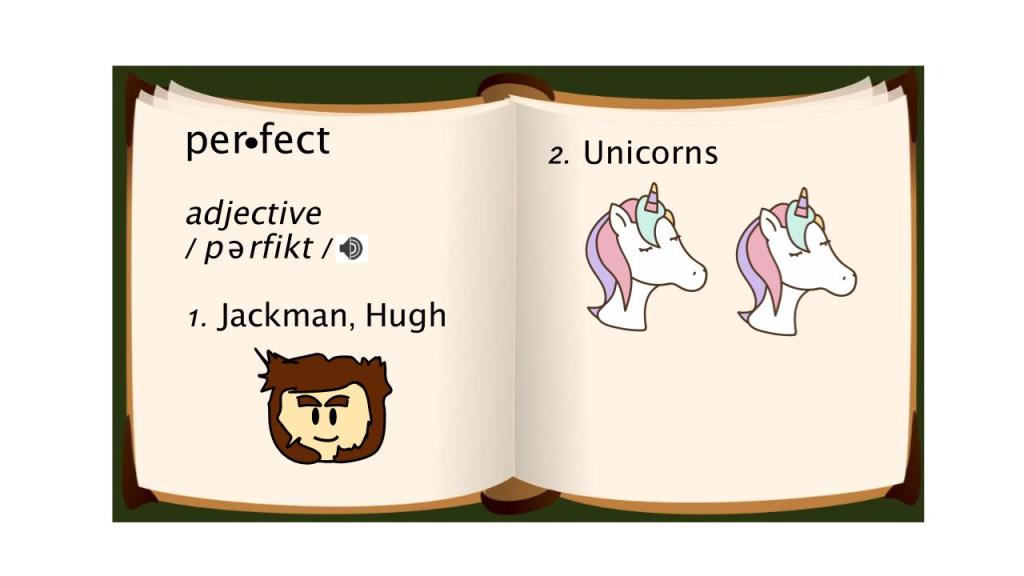
Let’s take a look at how a flawed human being could ever be considered perfect. The definition of “Perfect” in the Oxford dictionary is as follows:
per•fect
adjective
/pərfikt/
1. having all the required or desirable elements, qualities, or characteristics; as good as it is possible to be.
Despite our imperfections, we each contain within us all of the required or desirable elements that we need to be our best selves. That some of these elements are a work-in-progress or yet to be uncovered does not mean that we do not possess them. We are made up of both realized and unrealized potential. The acorn is no less perfect than the oak tree it will grow to become.
The reality is that no-one is “perfect” in the sense of having no flaws or defects. You don’t have to be perfect by an objective, pin-up billboard standard (which doesn’t even exist). You just have to be yourself and accept yourself at the stage of development that you are in.
“To be beautiful means to be yourself. You don’t need to be accepted by others. You need to accept yourself.”
Thich Nhat Hanh
Learning To Accept The Imperfect
As “perfect” in an objective sense does not exist, we can either:
- (i) accept that “perfect” should only used in a theoretical sense to describe unicorns and Hugh Jackman as Wolverine (who’s pretty much perfect); or
- (ii) accept that our “perfect” selves in our current state is going to include imperfections and flaws.
By accepting that having imperfections is inevitable, we can then accept that they are not a reason for feeling that we are not enough. We can be perfect despite being imperfect.
Here are 3 important elements in accepting our imperfect selves as perfect:
1) The positive of imperfections
We tend to view imperfections as inherently bad and something that should be “fixed” or hidden from view. But imperfections are not just an evitable part of being human, they have a positive side as well.
Firstly, our imperfections are an important part of what makes us unique and interesting, as well as endearing to others. The perfect, flawless person who never has a bad day or vulnerable moment may be admirable from afar, but doesn’t have much to offer up close.
We often feel much more connected with someone after they reveal a vulnerability or imperfection. Then we realize “Oh, they are human – just like me!“. If we constantly strive for “perfection” by fixing or hiding our weaknesses, we are missing a chance to be our unique selves and to connect with others.
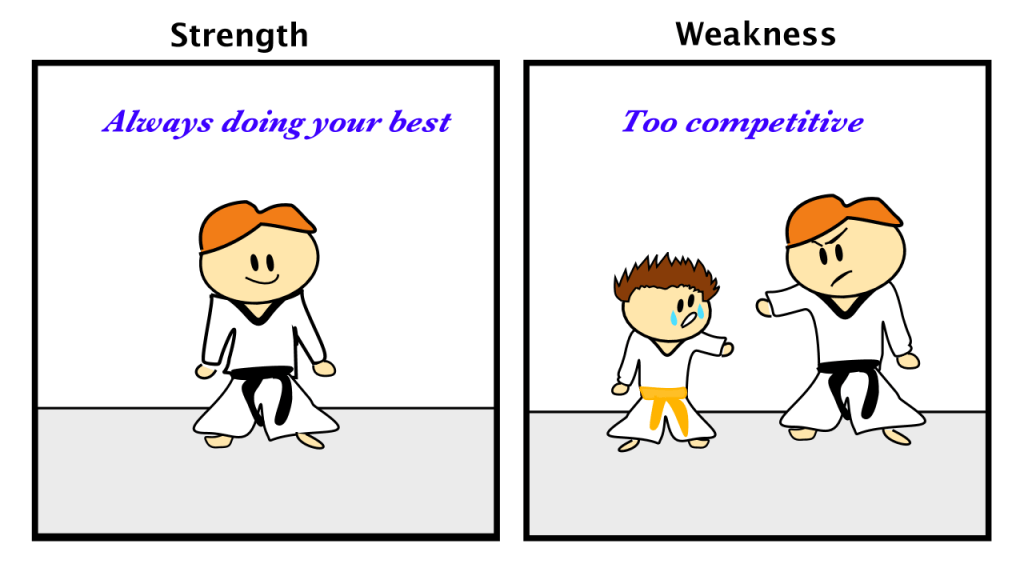
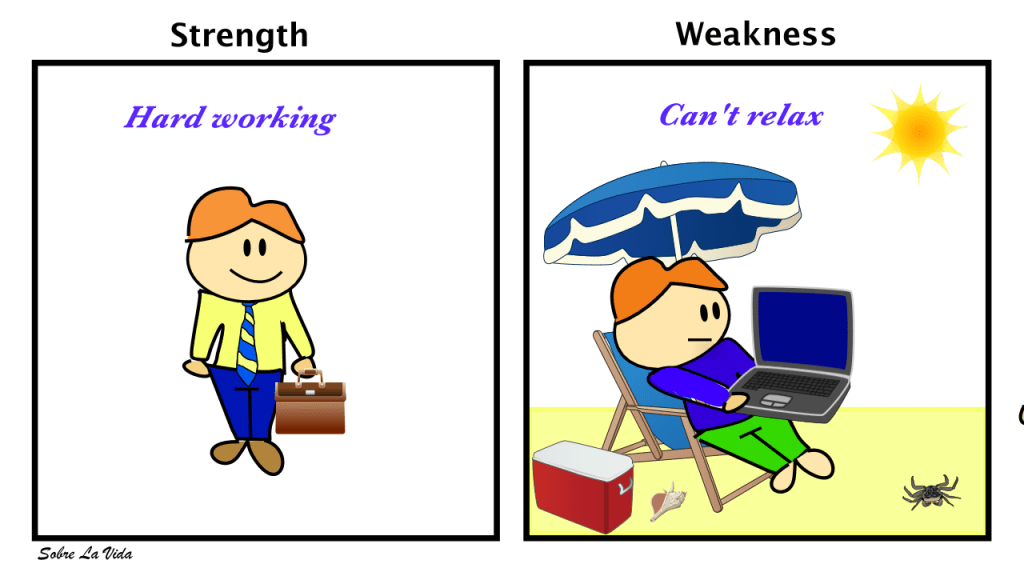
Secondly, our imperfections are often the other side of a strength.
For instance – being bossy means I know how to take charge, being a perfectionist means you’re really good at details.
That is, having a strength means accepting corresponding weaknesses (or imperfections). A weakness is often a counterbalancing limitation on a strength going too far. The two complement each other and it is unrealistic to expect to separate them and leave yourself only with strengths.
That doesn’t mean we shouldn’t want to improve our weaknesses. But we should accept that having weaknesses is a natural and valuable consequence of having strengths.
“Without darkness, there is no light.”
2) The desire to be better vs Perfectionism
It is of course great if you want to discover your best self. However, while self improvement as a goal is a healthy activity, it is also a perpetually ongoing process. It’s (highly) unlikely that you’re going to reach your version of “perfect” in your lifetime.
“Yippeeee… nothing left to improve! I’m finally perfect and can now hang out with Hugh Jackson!“
The important part is the process, not the end result.
Too much focus on doing things well and improving oneself becomes perfectionism. This is a closer to an obsession that a genuine desire to reach one’s true potential.
As a result of the overwhelming need to do everything perfectly (an impossible goal), a perfectionist finds it hard to be present, appreciate themselves and connect with those around them. Perfectionism results in anxiety, insecurity and unhappiness. It prevents us from enjoying our lives and living in the moment.
Perfectionism is a cover for the fact that deep down we don’t consider ourselves worthy. Instead, we need to continually “prove” our worth to ourselves and others. We tell ourselves we would like ourselves more if only we had a better job / stronger body / were funnier / more successful etc.
But the reality is, these factors won’t change how we feel about ourselves. True self-acceptance has nothing to do with external achievements, what we do or what we have. It is learning to accept yourself as you are.
“Does the rose have to do something? No, the purpose of a rose is to be a rose.
Your purpose is to be yourself. You don’t have to run anywhere to become someone else. You are wonderful just as you are.”
Thich Nhat Hanh
3) Becoming whole
“I would rather be whole than good.”
Carl Jung
When we learn to accept our imperfections, we become whole. We stop needing to deny or hide parts of ourselves. We also stop needing to project our shortcomings onto others or criticize, judge and blame.
When we become whole, we accept that all humans are “both / and” instead of polarizing the world with “either / or”. Everyone has both good and bad in them. It is not a question of being either a good person or a bad person.
In embracing our imperfections, we learn to love ourselves unconditionally and without self-criticism. In turn we develop the potential to love others unconditionally.
“When I’m loving all of me, all of my perfectly imperfect self, I become whole.”
John Bradshaw
You Are Perfect Already
It’s great if you are working on improving yourself. But at the same time, you are enough exactly as you are, here and now, with or without the “more” that you might be working on.
What do you lack in order to be you? Nothing.
Don’t get caught in the trap of telling yourself you are only likeable or worthy if you “perform” at a certain level, “look” a certain way or “have” something more. Recognize when you’re doing something out of a genuine desire to improve or the need to cover up a sense of unworthiness.
If you do not feel worthy as you are now, your work is in learning to love and accept yourself, not in chasing the false illusion of perfection.
Because you are perfect already. Perfectly imperfect. Perfectly you. 💛
“If there’s any definition to being perfect, you’re perfect at being yourself.”
Zendaya
 Sobre La Vida